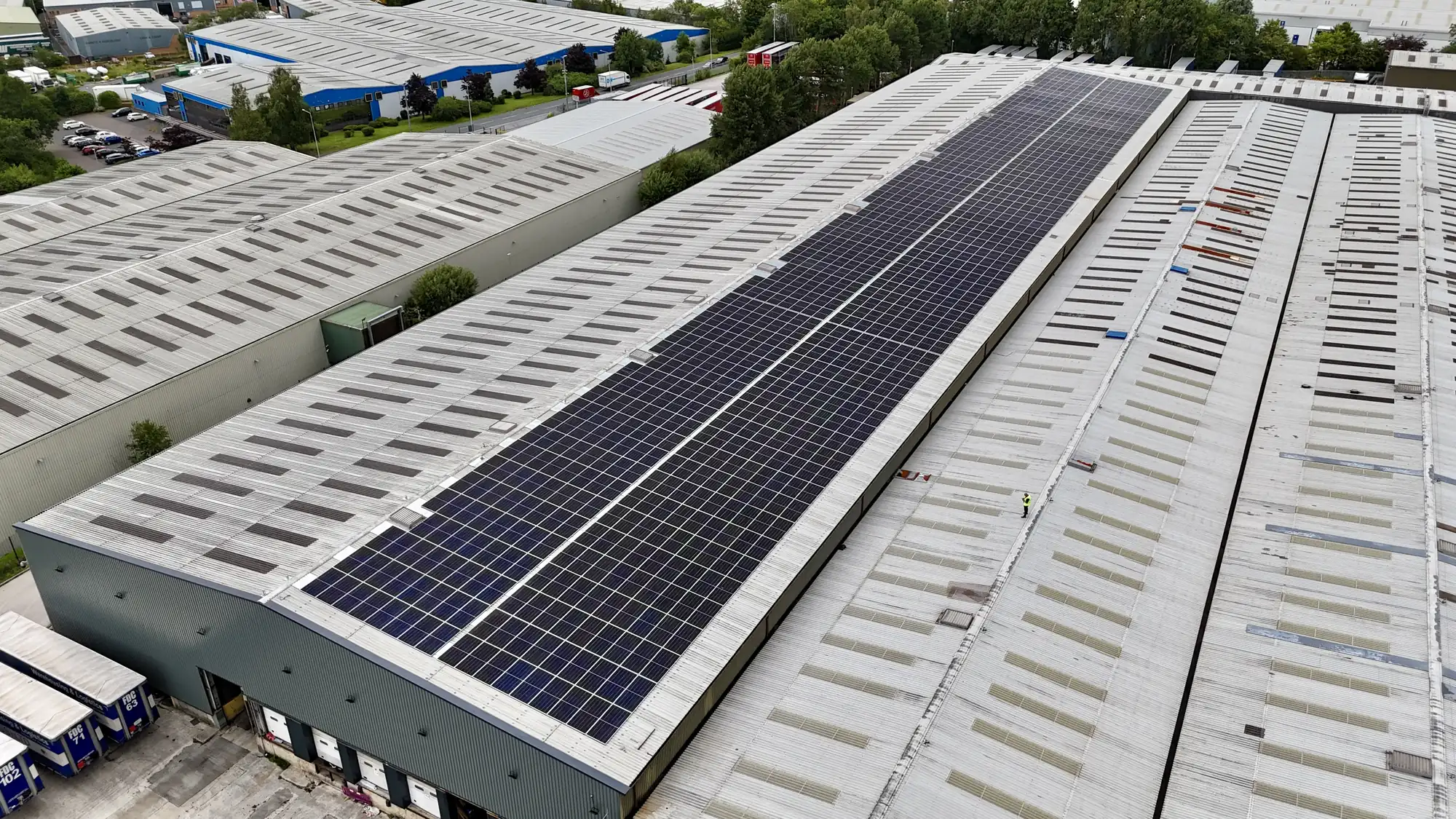

Commercial solar is one of the most reliable ways for a business to cut both energy costs and carbon. The question most finance directors and site managers ask first is simple: how long before it pays for itself? This guide explains how commercial solar payback works, what pushes it up or down, and how we model it before you commit to anything.
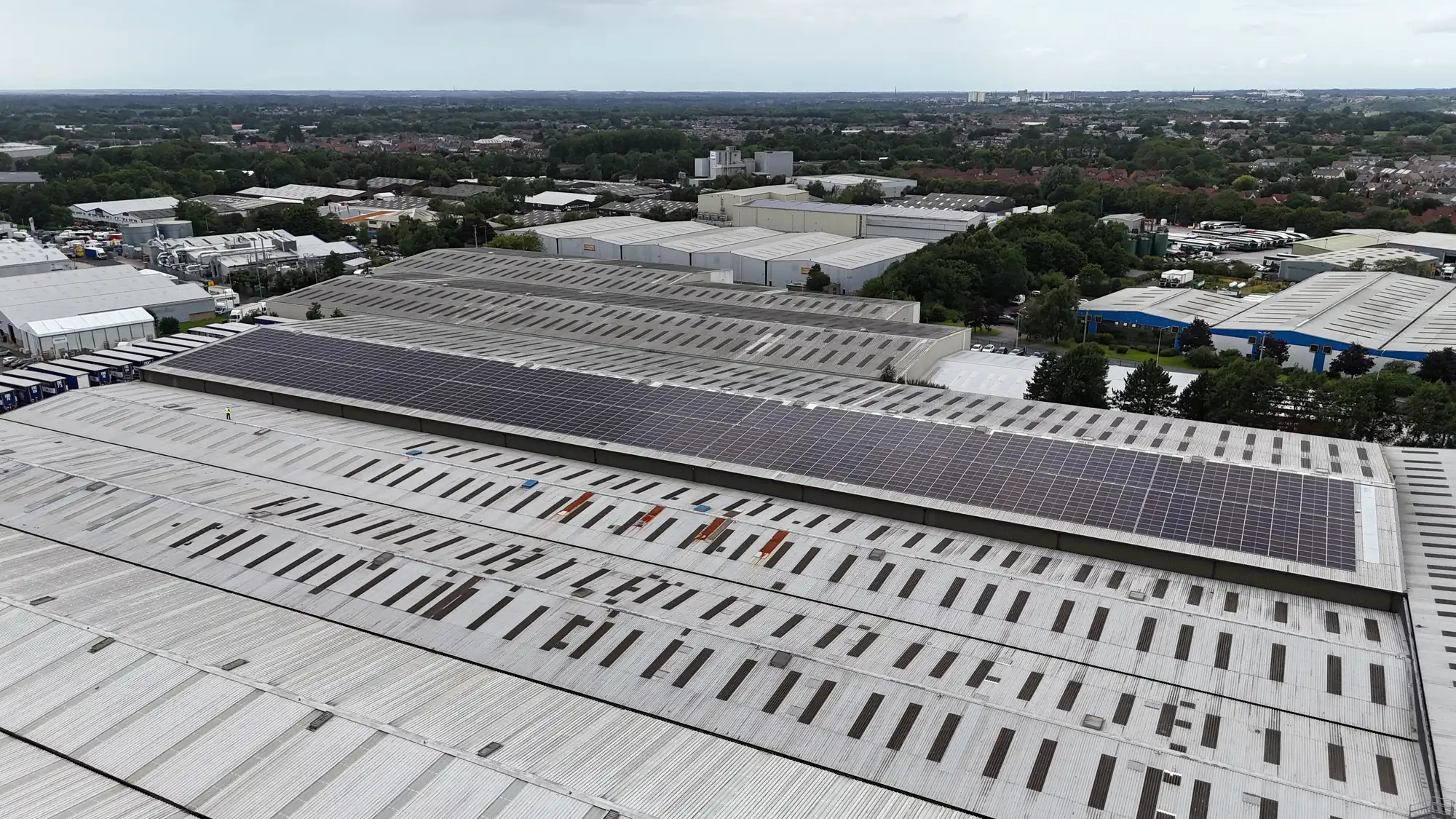
What payback actually means
Payback is the time it takes for the savings and income from a solar system to cover what it cost to install. After that point, the electricity the array produces is mostly savings for the rest of its working life. On our commercial solar panel schemes, typical payback is around two to four years, and our panels are designed for a generating life of 25 years and more.
The reason payback can be so short is the gap between what you pay for grid power and what your own power costs. Electricity you generate on your own roof works out at around 5p per kWh, compared with 25p to 30p per kWh from the grid. Every unit you generate and use on site is a unit you are not buying at full price.
What drives commercial solar payback
Daytime demand
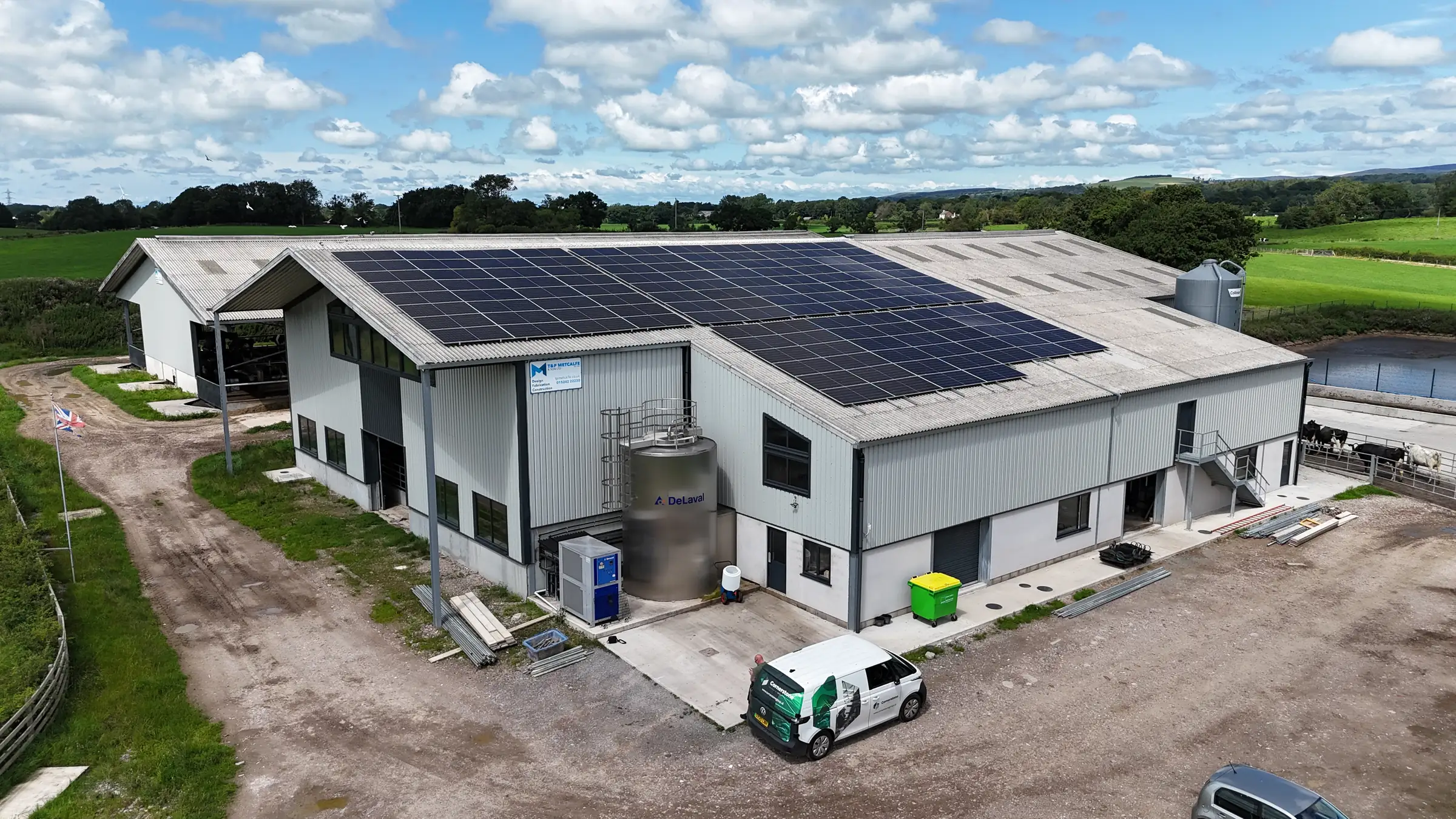
Solar generates during daylight hours, so the businesses that benefit most are the ones using a lot of power during the working day. Factories, warehouses, farms and hospitals all tend to have high daytime loads. In solar for manufacturing, for example, machinery, compressors, extraction and lighting draw power throughout the day, which is exactly when the array is producing.
Self-consumption
Self-consumption is the share of your solar generation that you use on site rather than export. It matters because exported power earns much less than the grid price you avoid by using it yourself. Without storage, a typical commercial solar installation self-consumes only 40% to 55% of what it generates, exporting the rest at low Smart Export Guarantee rates. That is why we design systems to prioritise on-site consumption.
Battery storage
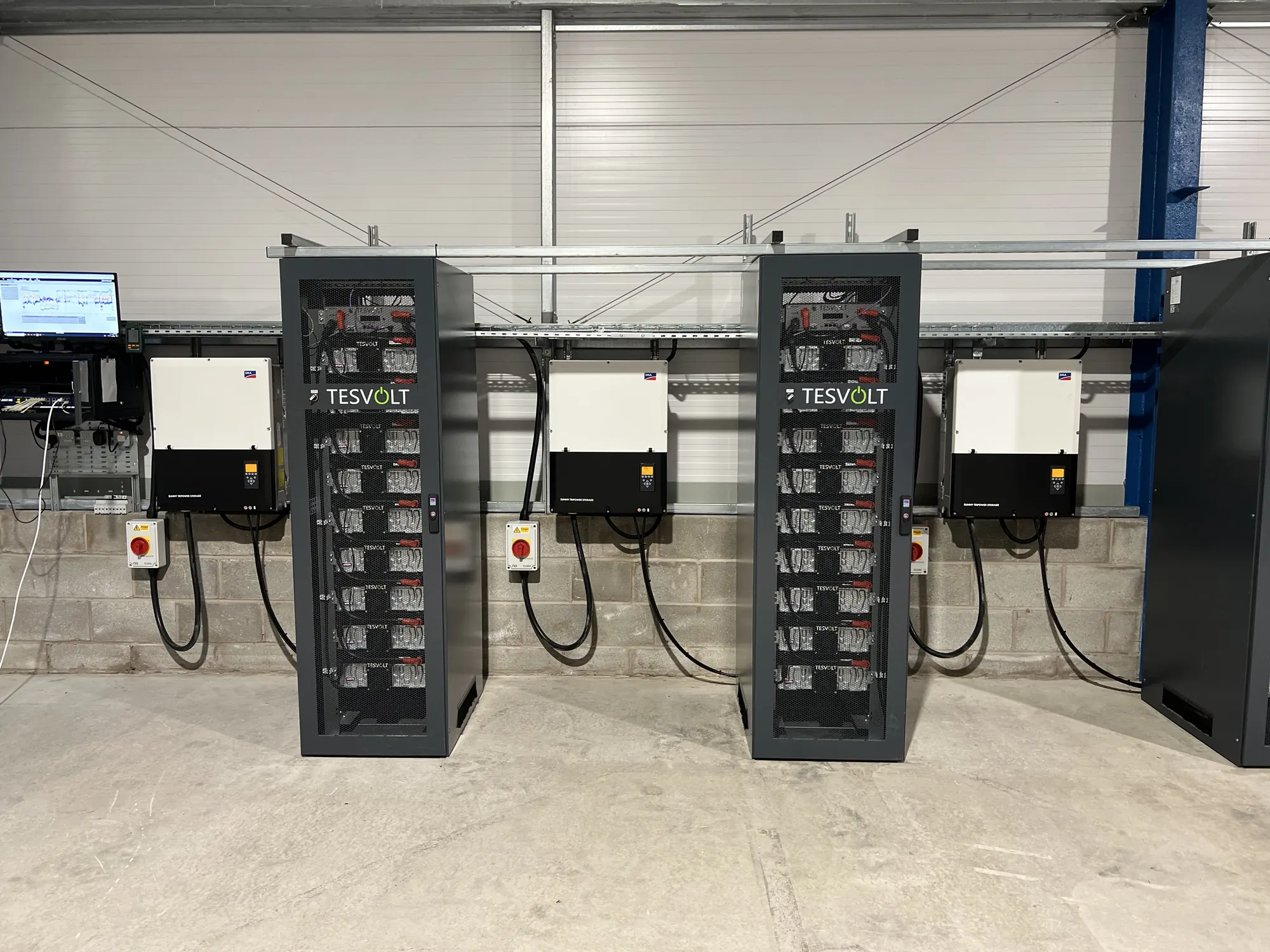
Adding a battery lets you hold surplus daytime generation and use it later. According to our figures, pairing solar with storage raises self-consumption to 75% to 90%, which cuts grid reliance and costs further. Our guide to battery storage for business explains when that extra investment makes sense.
Roof condition
Putting new panels on a tired roof is a false economy. If the roof needs replacing part way through the array's life, the panels have to come off and go back on, and that cost eats into your return. If your roof is near the end of its life, read should you re-roof before installing solar before you decide.
Export limits and grid connection
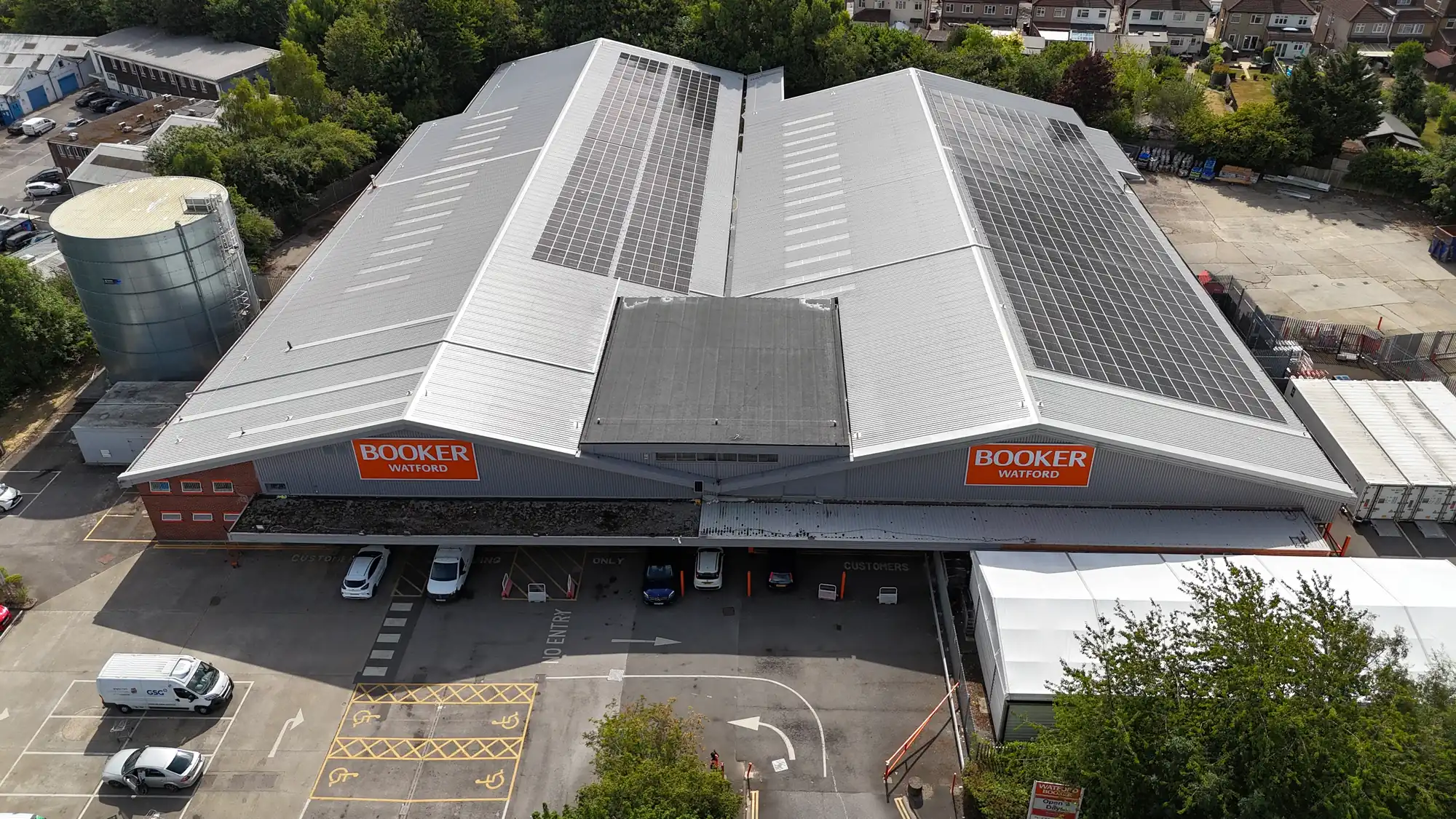
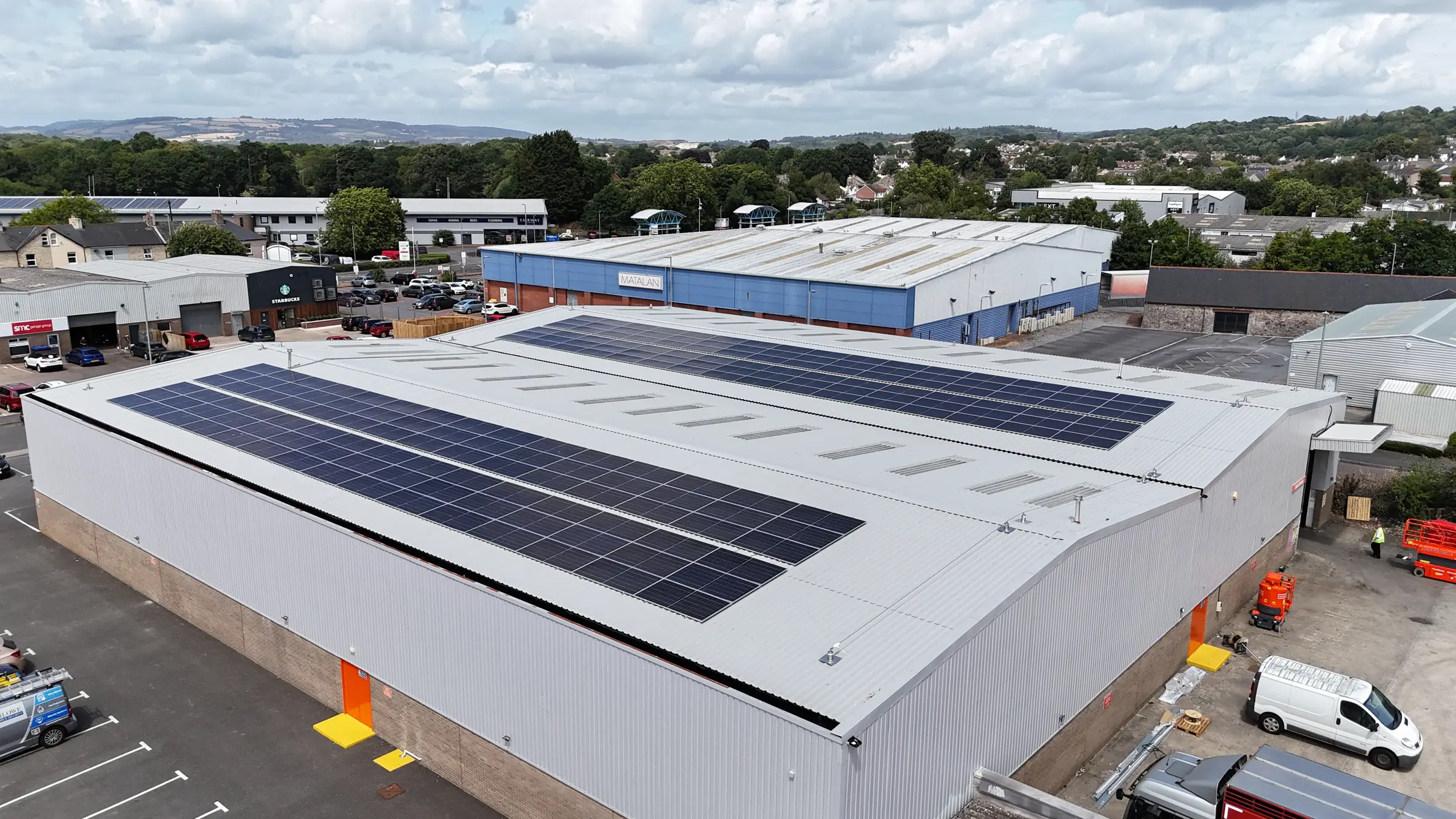
Your local network operator (DNO) can cap how much you export. At Booker Watford, export was capped at 200 kW to meet DNO requirements, so the design prioritised on-site consumption to maximise savings. We handle DNO applications and export limiting as part of the job.
What payback looks like in practice
Our completed projects show the pattern:
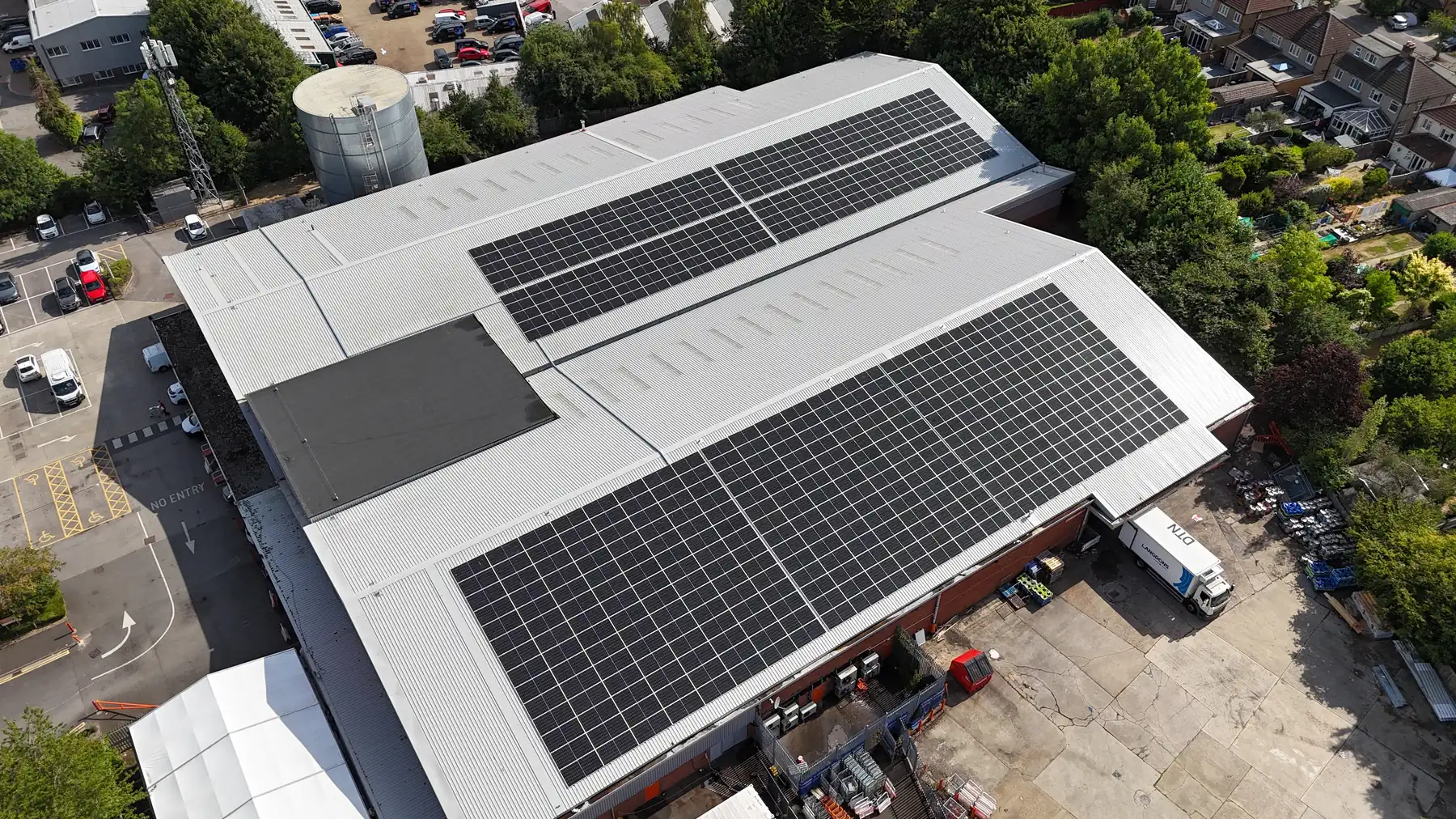
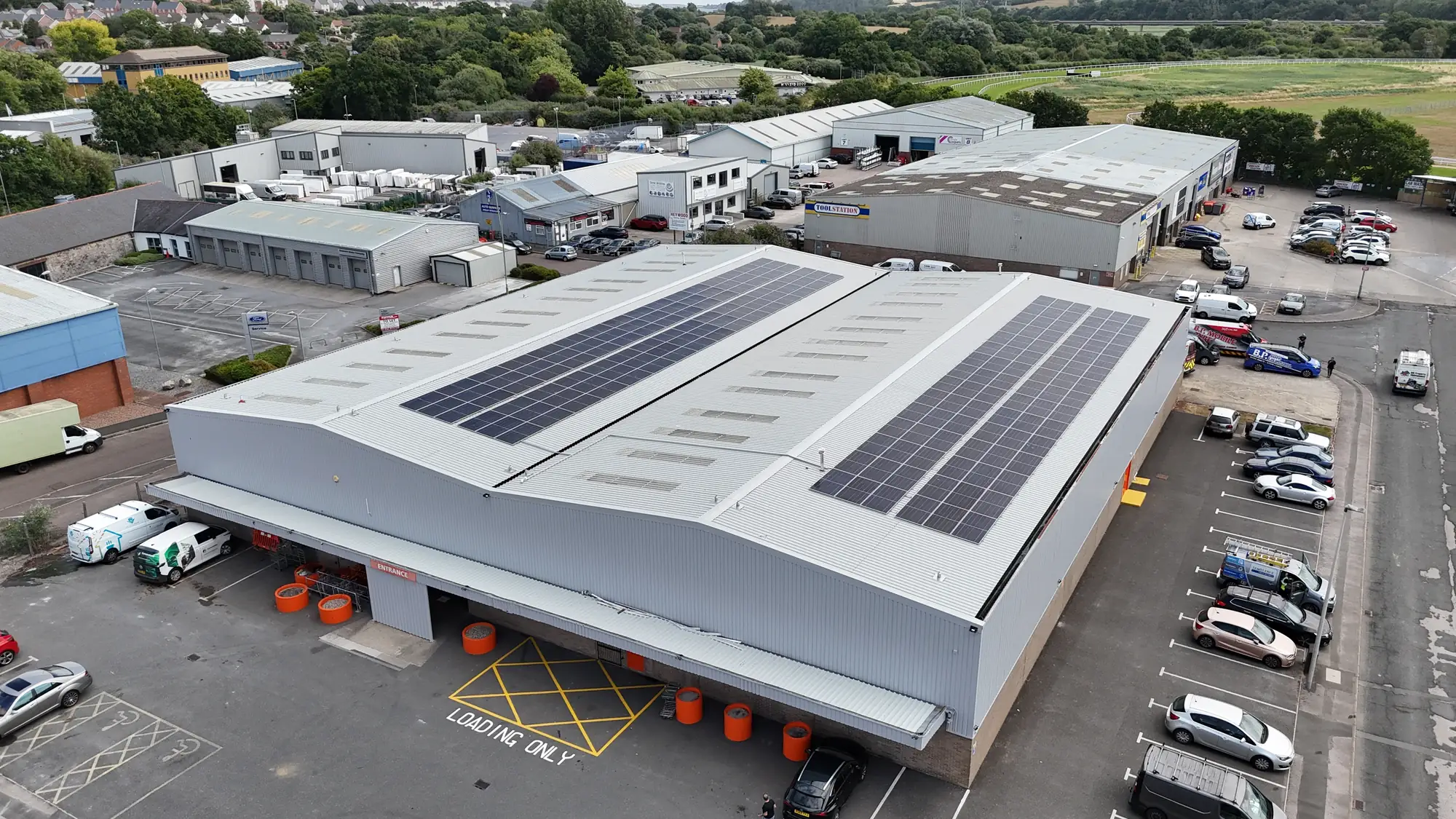
- Booker Watford: a new roof and a 334 kWp array delivered together, with a 3.1-year payback and roughly 70 tonnes of CO2 saved a year.
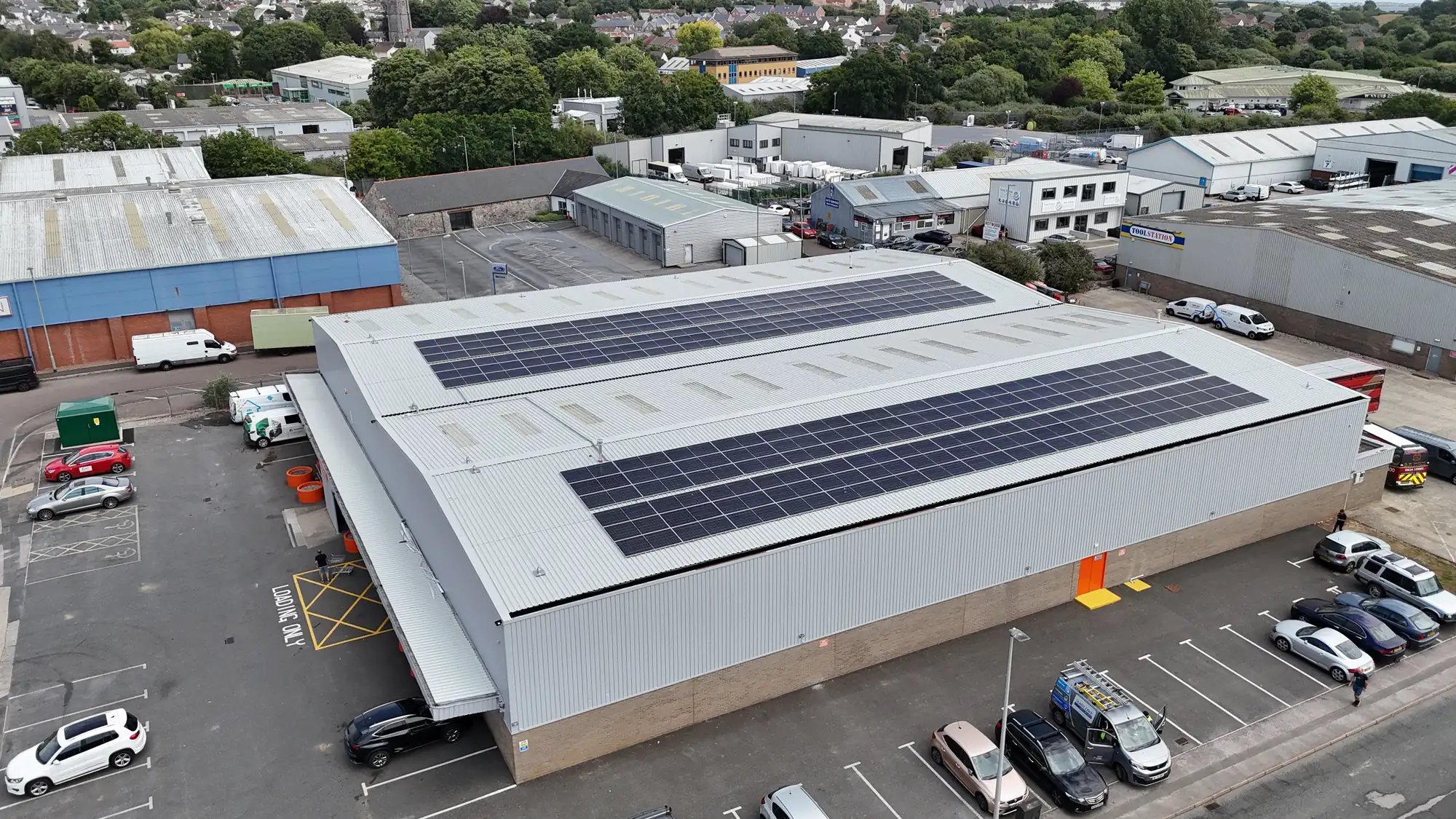
- Booker Newton Abbott: a 114 kW system with 40 kW export capacity and a 3.4-year payback. See the Booker Newton Abbott case study.
- Bilsborrow Hall Farm: a 75 kW roof and ground-mounted system for a family dairy farm, with a 3.3-year payback. Read the Bilsborrow Hall Farm case study.
- FDC Holdings: a 750 kW scheme generating around 900,000 kWh a year, which cut electricity bills by 35% in its first year. See the 750 kW solar PV scheme.
How Cornerstone models your payback
Every site is different, so we do not quote a payback figure from a rule of thumb. We start with your actual half-hourly consumption data, or install CT-clamp monitoring if that data is not available. We then size the system to your load and model generation, savings and payback before you commit.
The assessment covers roof space, land availability, structural load limits and electrical capacity, across rooftops, car parks and ground-mounted areas. Where storage could improve the numbers, we model that too. Where the roof needs work, our roofing team can replace it and our energy team can install the array in one coordinated programme.
When we fit your new roof and install your solar, both are covered by a single combined 30-year warranty from Cornerstone.
You can read more about that in our article on the combined roof and solar 30-year warranty.
Paying for it
Payback is not the only way to look at the numbers. We can structure project costs, including associated works such as a new roof, into a single finance package (CAPEX, lease-to-own or a green loan) that is offset from day one by your energy savings. For a wider plan across several buildings, our decarbonisation service builds a costed, phased roadmap.
More from the project
Talk to us
Send us your roof details or your energy bills and we will model your savings and payback, with no obligation. Tell us about your site or call us on 0800 011 9758.
Power your business with solar.
Our renewables team designs, installs and maintains commercial solar, storage and EV charging across the North West and the UK.